BirdDog versus Intent Data
Noah Jacobs
Jan 2, 2026
BirdDog signals provide strategic, real-world insights into target accounts—like executive initiatives and business goals—that help sales teams engage decision-makers and drive complex, high-value deals through the entire sales cycle. In contrast, intent data is best for booking initial meetings in short, transactional sales by identifying prospects showing online interest, but lacks the depth needed to close larger, multi-stakeholder deals.
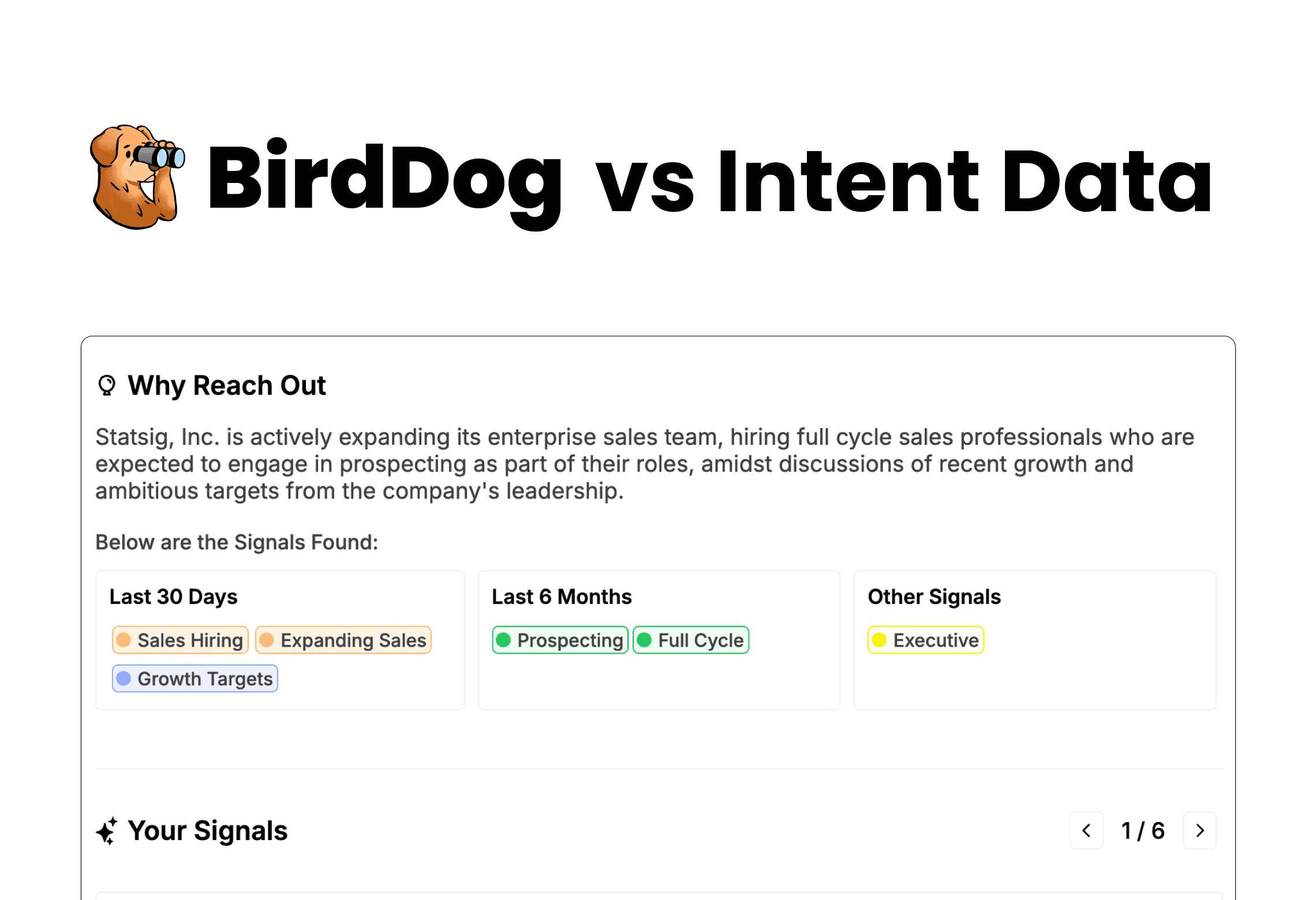
BirdDog provides real-world account signals that empower B2B sales teams to prioritize target accounts, book more meetings, maintain leadership throughout the sales cycle, avoid pitfalls, and even revive closed-lost deals.
These sales signals enrich the entire selling process by offering insights that truly resonate with decision-makers especially at the executive level.
What Is Intent Data?
Intent data is a broad term for behavioral data that reveals what people at target accounts are actively searching for online, including visits to your company’s website. It can help identify which companies are researching solutions like yours or engaging with your brand digitally.
While this type of data can be valuable for initiating conversations, it often lacks depth when it comes to understanding actual business priorities or decision-making dynamics.
The largest providers of intent data: 6sense, Bombora, Zoominfo, and Demandbase.
Key Differences Between BirdDog Signals and Intent Data
A critical difference: BirdDog signals resonate with your buying committee, providing strategic insights into a target account’s priorities, such as executive quotes, public statements, or internal initiatives.
Even seemingly minor cues—like a quote from a senior executive can reveal underlying business goals or transformation projects. High-value signals, such as 9- or 10-figure strategic initiatives, offer powerful talking points throughout the sales cycle and help sellers align their offerings with the company’s direction.
In contrast, intent data is more effective for high-volume outbound efforts. For example, if someone from a prospect account visits your site and you capture their contact info, it’s a great way to book a meeting. But it’s far less effective as a closing tool especially in complex sales.
When to Use BirdDog Signals
Use BirdDog when your sales motion involves:
Complex B2B sales with multiple decision-makers
C-level engagement and visibility
Sales cycles of 3–12+ months
Deal sizes from $30K to 7 figures
These signals support strategic account-based selling and can be used throughout the sales process, not just at the top of the funnel.
When to Use Intent Data
Intent data works best for:
High-volume outbound strategies
Short sales cycles (under 4 weeks)
Simple deals with 1–2 contacts
Contract values under $30K
Intent data is especially useful for lead generation and identifying warm prospects early, but it lacks the long-term strategic value of BirdDog signals.
Final Thoughts
Even in complex sales environments, intent data can still play a valuable role in the early stages helping you get your foot in the door. But for long-term pipeline development and deal progression, BirdDog signals offer the strategic depth needed to engage and convert high-value accounts.
Ready to start targeting the best accounts?
Stop leaving money on the table. Join the rapidly growing list of companies adopting signals to drive their sales process.